By WeCare Senior Relocation Services
You’ve picked your new home. You know what fits. But what about everything else?
For many seniors, this is the hardest part of a move. After decades in one home, every item has a story. The good news: your belongings don’t have to be “gotten rid of.” They can be passed on, sold, or donated in ways that feel good. Here’s a practical guide to downsizing for seniors, and what to do with the things you don’t keep.
Start With Four Simple Piles
Before you decide where things go, sort them. Keep it simple:
- Keep: Items that fit your new space and truly matter to you
- Pass down: Items meant for family or friends
- Sell or donate: Items in good shape that someone else can use
- Let go: Items that are broken, expired, or unusable
Work one room at a time, and start with the easiest areas, like the garage or a guest room. Save sentimental spaces for later, when you’ve built momentum.
Option 1: Passing Down to Family and Friends
Passing things down is often the most meaningful choice. But a little planning prevents hurt feelings later.
Ask First
Don’t assume family wants Grandma’s china. Some will treasure it, and some won’t have room. Ask each person what they’d like.
Share the Story
An heirloom means more with context. Write a short note, or record a video, about where the item came from and why it matters.
Handle Fairness Gently
If more than one person wants the same item, talk about it early. Some families take turns choosing. Others agree on a fair system ahead of time.
Consider Giving Now
You don’t have to wait. Giving items while you’re here lets you enjoy seeing them appreciated.
Pass Down Memories Without the Item
If nobody has room, take photos or scan old letters and documents. You can keep the memory without keeping the object.
Option 2: Donating Your Belongings
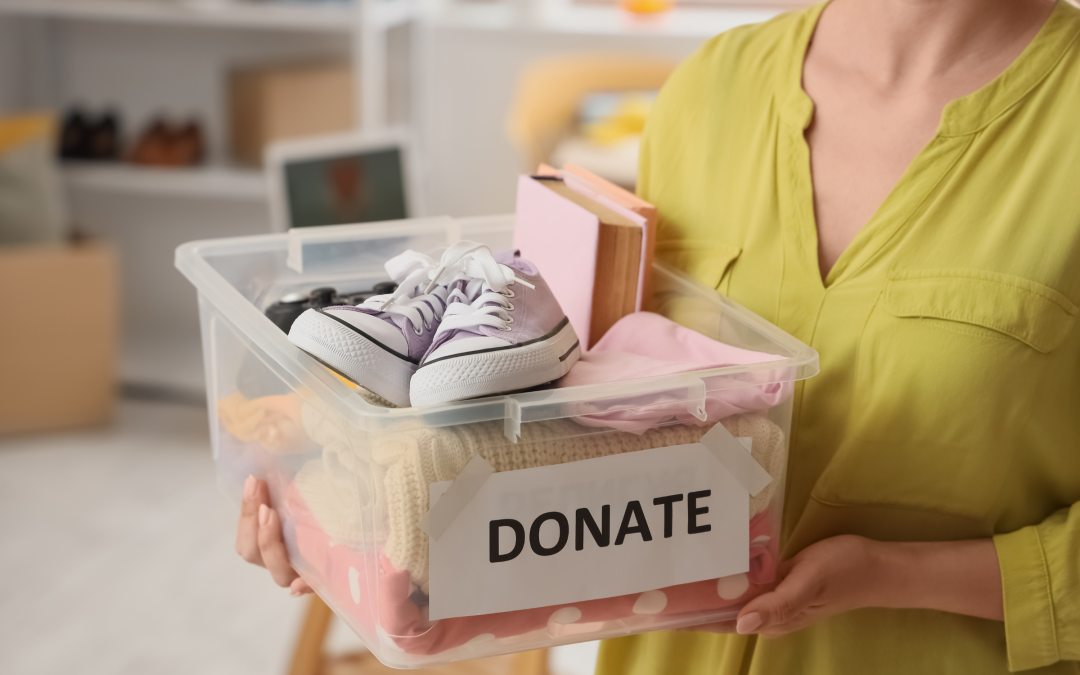
Donating is a great fit for things in good condition that still have life left. It’s also an easy way to make a move lighter.
What Donation Centers Often Accept
- Clean clothing and linens
- Kitchenware and small appliances
- Books and home decor
- Furniture in good condition
- Tools and household goods
Policies vary a lot. Always call first to ask what they accept, whether they offer pickup, and if there are any limits. Many charities decline items such as mattresses, damaged furniture, and certain electronics.
Don’t Forget the Paperwork
If you plan to claim a tax deduction, the IRS has rules:
- Clothing and household items generally must be in good used condition or better to be deductible
- Get a receipt from the charity showing its name, the date, and a description of what you gave
- For gifts of $250 or more, you generally need a written acknowledgment from the charity
- If your total noncash donations are over $500, you generally must file IRS Form 8283
Tax rules change and depend on your situation. Talk with a tax professional before you file.
Option 3: Selling Your Belongings
Selling can bring in money, but it also takes time and energy. Be realistic about what’s worth the effort.
Where Items Can Be Sold
- Estate sales: Good for selling a whole household of items at once. Professional companies typically charge a commission.
- Consignment shops: Best for quality furniture, decor, and clothing.
- Online marketplaces: Useful for specific items, though you’ll handle listings, messages, and pickups yourself.
- Auction houses and dealers: Better for jewelry, art, antiques, coins, and collectibles.
Get Valuables Appraised
If you think something may be worth a lot, such as fine jewelry, art, silver, or antiques, ask a qualified appraiser before you sell or donate it.
Set Realistic Expectations
Most used furniture and household goods sell for much less than people expect. If an item has sat unsold for weeks, donating it may be the easier choice.
Option 4: Letting Go Responsibly
Some things can’t be passed on, sold, or donated. Handle them with care.
- Documents: Keep important papers, such as wills, deeds, medical records, and tax records. Shred old statements that contain personal information.
- Medications: Use a pharmacy take-back program or other safe disposal method.
- Hazardous items: Paint, chemicals, batteries, and similar items often need special drop-off.
- Recycling: Check local programs for electronics and metal.
- Junk removal: For bulky items nobody wants, a hauling service can save your back.
Which Option Fits? A Quick Guide
- It has sentimental value and family wants it: Pass it down
- It’s in good shape and not valuable: Donate
- It’s valuable or collectible: Appraise, then sell
- It’s everyday furniture and decor: Try consignment or donate
- It’s broken or unsafe: Recycle or dispose of it properly
- You’re unsure: Set it aside for a week, then decide
Why This Process Feels So Hard
Letting go isn’t just about stuff. It can bring up grief, nostalgia, and worry about what the move means.
If you feel stuck, that’s normal. Try these tips:
- Sort in short sessions of one or two hours
- Take a photo of items you’re saying goodbye to
- Keep a small “memory box” for the most precious things
- Ask a trusted person to sit with you while you sort
How WeCare Senior Relocation Services Can Help
You don’t have to sort, sell, donate, and move alone. As a senior move manager, WeCare guides you through every step, with respect for what each item means to you.
Our team can help with:
- Downsizing and decluttering: We help you sort what to keep, donate, or pass on, while honoring sentimental value
- Estate management: We support the organization and respectful disposition of belongings, according to your wishes
- Packing and unpacking: We protect your treasures and set up your new home your way
- The move itself: We are the mover, with no outsourcing
We help seniors move to independent living, assisted living, memory care, CCRCs, and 55+ communities, as well as internal moves within a community. We serve Charlotte, Sarasota, Manatee, Collier, and Lee Counties in Southwest Florida, and we also handle out-of-state moves.
Quick Answers
Where should I start when downsizing?
Start with the easiest spaces, like closets, the garage, or guest rooms. Build confidence before tackling sentimental items.
Are donations tax-deductible?
Often, if you itemize and the charity is qualified. Clothing and household items generally must be in good used condition or better. Ask a tax professional about your situation.
Is it worth selling used furniture?
Sometimes. Quality or antique pieces can sell well, but common furniture often brings little. Donating can be simpler.
What if family members disagree about who gets what?
Talk early, listen to everyone, and agree on a fair system. A neutral third party can help keep things calm.
Can someone help me sort and decide?
Yes. A senior move manager guides you through sorting, selling, donating, and moving, so you don’t carry it alone.
Let’s Make Your Move Easier
Your belongings tell your story, and they deserve a thoughtful next chapter. We care about your move, so you don’t have to carry it all yourself.
Call us at (941) 380-6683 or email kathy@wecaretn.com to talk about your move. We’ll listen, answer your questions, and help you create a plan that feels right.
Article 1: Dental Anxiety and Special Needs: How Sensory-Friendly Visits Make a Difference
By Enable Dental | At-Home and On-Site Dentistry
For many people, the dentist’s office is a lot. The bright lights, the whirring tools, the strong smells, the unfamiliar faces. Add a long car ride and a waiting room, and even routine care can feel overwhelming.
For people with special needs, memory challenges, or sensory sensitivities, that stress can be even greater. Often, it means dental care gets delayed or skipped altogether.
The good news is that sensory-friendly dental care can change the experience. Here’s what makes visits hard, what helps, and how care at home can make a real difference.
Why Dental Visits Cause Anxiety
Dental anxiety is common, and it has many causes. People may worry about:
- Pain or discomfort
- Loud or unfamiliar sounds
- Not knowing what will happen next
- Feeling out of control
- Past negative experiences
- Being in a new place with new people
For caregivers, the stress is real too. Planning transportation, managing appointments, and keeping a loved one calm can be exhausting.
How Special Needs Can Add to the Challenge
People with autism, intellectual and developmental disabilities, dementia, or sensory processing differences may experience a dental office very differently.
Sensory Overload
A dental office can overwhelm the senses all at once:
- Sight: Bright overhead lights and unfamiliar equipment
- Sound: Drills, suction, and background noise
- Smell and taste: Antiseptic scents and dental materials
- Touch: Instruments, gloves, and having the mouth open for long periods
Changes in Routine
Many people with special needs or memory loss rely on predictable routines. Leaving home, traveling, and sitting in a waiting room can bring confusion, fear, or distress before treatment even begins.
Communication Barriers
Some patients can’t easily say what hurts or what they need. Caregivers may notice signs like refusing to eat, pulling at the face, or sudden behavior changes. These can point to dental pain.
What Makes a Dental Visit Sensory-Friendly?
A sensory-friendly visit focuses on comfort, predictability, and patience. Common strategies include:
- Familiar surroundings that reduce unfamiliar triggers
- Calm, quiet spaces with fewer people and less noise
- Gentle pacing with breaks when needed
- Clear explanations before each step, in simple language
- Caregiver involvement so a trusted person stays close
- Comfort items such as a favorite blanket, toy, or music
- Flexible scheduling at a time of day when the patient is most relaxed
No single approach works for everyone. The best care is tailored to the person.
How At-Home Dentistry Helps
At Enable Dental, our team comes to the patient, wherever they are. That includes private homes, senior living communities, assisted living facilities, and community centers.
This model can ease many common stress points.
No Travel, No Waiting Room
Patients stay in a familiar place. There’s no car ride, no escort needed, and no crowded waiting area. This helps maintain routine and reduces stress for residents, families, and caregivers.
A Familiar Environment
Care can happen in a communal area, in the patient’s apartment, or bedside for those who need it. Being surrounded by familiar sights, sounds, and people can help patients feel safer.
Full Dental Care, Delivered Portably
Our team uses handheld digital X-ray units, custom dental chairs, and wheeled dental units. These tools allow us to diagnose and treat patients thoroughly in different living environments.
Services include:
- Exams and X-rays
- Cleanings and hygiene therapy
- Fillings and crowns
- Extractions
- Dentures
- Root canals, bridges, and night guards
Personalized Care Plans
Each patient’s dental and health history is assessed to create a personalized plan. We tailor the approach to the patient’s needs and preferences, so care is both effective and comfortable.
Less Burden for Caregivers
We handle scheduling, care coordination, and billing. Patients are seen on a regular, recurring schedule, so families and caregivers don’t have to keep track of it all.
Tips for Caregivers: Preparing for a Dental Visit
A little preparation helps any visit go more smoothly.
- Share what you know. Tell the dental team about triggers, fears, and what helps your loved one stay calm.
- Note sensory preferences. Mention sensitivities to light, sound, touch, or taste.
- Keep the day simple. Avoid packing the schedule before or after the appointment.
- Use simple language. Explain what will happen in short, positive terms. Visual aids or a simple story can help.
- Have comfort items ready. A favorite blanket, music, or toy can be reassuring.
- Stay close. Your presence can make a big difference.
- Praise effort. Celebrate cooperation, even small steps.
Why Regular Dental Care Matters
Skipping dental care can lead to bigger problems. Untreated decay and gum disease can cause pain, infections, trouble eating, and changes in behavior. Good oral health is also part of overall health.
At-home dentistry can also reduce the need for hospital visits and lower infection risk, which is especially important for patients with complex health needs.
Who Can Benefit from Sensory-Friendly, At-Home Dental Care?
- Adults and children with autism or sensory sensitivities
- People with intellectual and developmental disabilities
- Seniors with dementia or memory challenges
- Homebound or bedridden patients
- Individuals with mobility limitations
- Anyone with strong dental anxiety
Quick Answers
What is sensory-friendly dental care?
Its dental care designed to reduce sensory overload and stress. It focuses on a calm setting, a gentle pace, clear communication, and individual comfort.
Can dentists treat patients at home?
Yes. With portable equipment, Enable Dental can provide many treatments performed in a traditional office, including exams, X-rays, cleanings, fillings, extractions, crowns, and dentures.
How do I know if my loved one has dental pain?
Watch for refusing food, pulling at the mouth or face, drooling, swelling, bad breath, or sudden changes in mood or behavior. A dental exam can help find the cause.
Can a caregiver stay during the visit?
Caregivers are an important part of the process. Let our team know how you’d like to be involved.
Does Enable Dental work with facilities?
Yes. We partner with senior communities, group facilities, HCS and special needs facilities, and other programs.
Ready for Stress-Free Dental Care?
Everyone deserves dental care that feels safe and respectful. At Enable Dental, we solve important dental issues and reduce stress for patients and their loved ones. Our licensed professionals are highly qualified and committed to providing the best care, right where your loved one is most comfortable.
Call us at (866) 988-4504 or email info@enabledental.com to ask questions, check availability, or book a first appointment. You can also register as a new patient on our website. We’re here to help.